

 or https:// as an added precaution.


















Traditional Badminton Scoring System (Simplified)
Middle and upper class women playing battledore, (the precursor to badminton) in the early 19th century.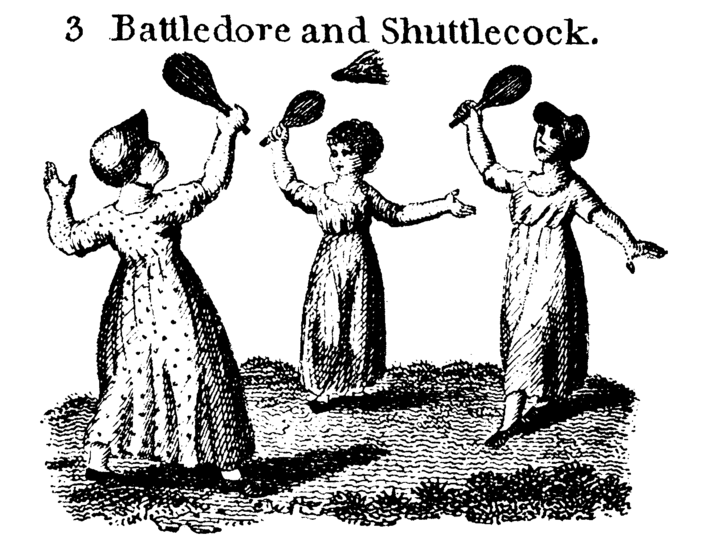
By Chiu Ling (SportSG)
The traditional badminton scoring system dates a long way back to 1873. While this set of rules has officially been replaced by a new scoring system December in 2005, some quarters of the badminton community are still following the traditional rules for their recreational games.
Under the traditional rules, all games are played to:
- 15 points for men and
- 11 points for women.
Winners are determined by the best of 3 games.
One distinguishing difference with the modern system to note is that points can only be scored in a rally by the serving side. Hence, the receiving side will first have to work hard to earn back the service before they can secure points by winning the subsequent rallies.
In a singles game where there is 1 player on each side, service will be transferred to the opposing side if the server loses a rally and the game continues back and forth in this manner.
In a doubles game where there are 2 players on each side, the second player on a team (also referred to as the second server) will deliver the service for the next rally if they had lost the previous one. Service will only be transferred to the opposing side if the team loses again.
Due to the unpredictability and often lengthy time required for badminton matches under the traditional system, the International Badminton Federation experimented with a new scoring system in 2002. Revisions were made along the way before the Federation finally settled on the current system which was re-introduced in December 2005.
To receive the latest updates on the happenings in the Singapore sports scene, or to find out more about some of the latest programmes on offer at ActiveSG, like our Facebook page here.