

 or https:// as an added precaution.


















Passing and receiving the ball in floorball
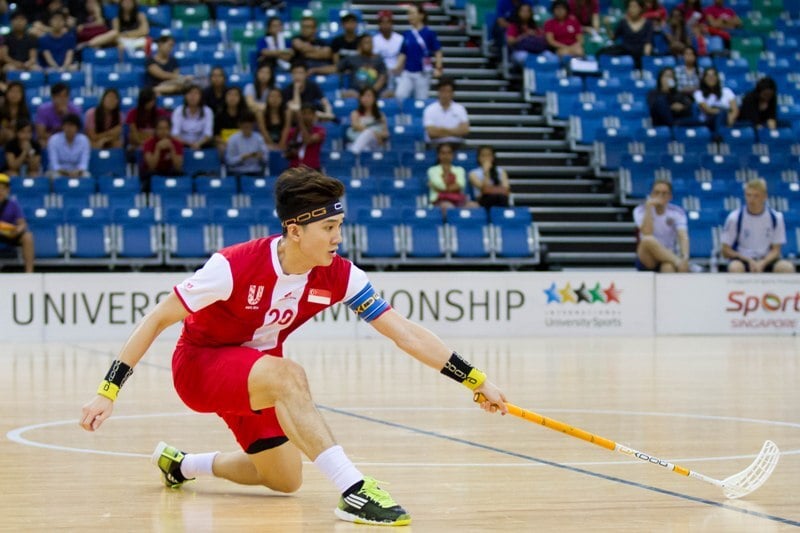
Image credit: Dyan Tjhia/SportSG
The ball can be passed faster than any player can run. It is important to bear this in mind when playing floorball.
Whether running with the ball or not, a field player should always be prepared to pass the ball. A ball can be passed with both the forehand and backhand, and the more readily a player can hit a pass, the more advantageous for the game. Apart from learning how to pass a ball correctly, it is also equally important to know how to receive a ball.
Basic pass
The most common pass is low on the floor. A pass that is hit low is easy to receive and therefore can be passed on much quicker than any other pass.
The ball should be kept close to the blade until it is actually released. Rather than a clean hit, a low pass is achieved by a sweeping movement, much more like pushing the ball. The ball is kept on the blade from the beginning of the pass. First, both the ball and the blade are placed behind the body. Then, follows the sweeping motion, and the ball is released when next to the body. The stick will often continue to move further forward, although the ball is already on its way.
A pass will stay flat on the floor much more if the ball is dragged along from behind the body and released just next to the feet. The ball will roll if released as described here, making it easier to control at the receiving end. If the ball is released in front of the body with the blade more open, the ball will likely bounce. When the pass is completed, the stick should point in the direction the ball has gone.
The player needs to keep his balance during the pass. Beginners will tend to look at the blade and the ball, but this is generally not a good idea. The aim should be to play the ball without having to look at where it is. This way the players can keep their heads up and see what is happening in the game.
Receiving a pass
Receiving a pass is as important as playing one. For low passes, the blade should be on the floor. The stick is placed slightly in front of the body. The player’s head should be up, so he is aware of what is happening in the game. The ball is received softly in the middle of the blade to avoid an immediate bounce, and the blade should move backwards with the ball to slow it down. Turn the blade slightly, so that the ball is touched more on the top – reducing the bounce further.
Soft blades, and to a limited extent a soft flex can help a little with receiving passes, but the key to success is the right technique and game awareness.
To receive the latest updates on the happenings in the Singapore sports scene, or to find out more about some of the latest programmes on offer at ActiveSG, like our Facebook page here.