

 or https:// as an added precaution.







Fitness components in Volleyball
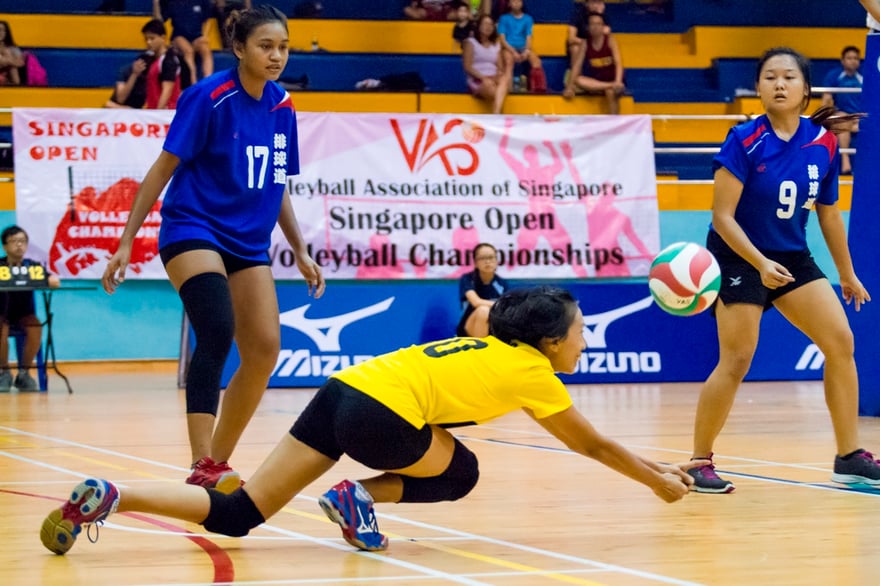
Image credit: Calvin Teoh/SportSG
An average volleyball player should hone a number of fitness components in order to become an all-rounder and be ready for whatever comes their way during a game.
Players need to move quickly around the court to counter the speed of serves and smashes. Speed and reaction time can be developed with activities like multi-directional sprinting within a perimeter, single and double-legged hops within a certain distance and training with a reaction ball.
The ability to change direction in a split second in accordance to ball direction is also crucial. In order to make successful plays, players often have to make quick decisions to dodge, duck or dive. Training for agility involves simple exercises like side-shuffles, back pedalling, rope-jumping and short sprints. Besides training the body to reduce reaction time, players also need to train their hand-eye coordination. This is why any agility exercises practised must mimic reactions and movements that could happen during a match.
Players need to hone their ability to generate enough upper body power and strength for spikes or blocks. A lot of leg power is needed for players to jump high enough to block or smash the ball over the net during play. Power is often defined as a combination of strength and speed, so incorporating speed training specific to common movements in volleyball can improve power in your movements. You can enhance upper body power with exercises like medicine ball throws and plyometric push-ups, while power in the legs can be improved using leg weights, rope-jumping or a rowing machine in the gym.
Squatting and lunging to return a volleyball requires loose and limber limbs. Often, players will work on their speed and agility but overlook flexibility. Players can become injured if their muscles are stretched too quickly or too far. Gently stretch your muscles towards their maximum range in stretching sessions before practice or matches, as this prepares your muscles for any aggressive movements.
Volleyball matches may be played over a long time due to the best-of-five rule, and may stretch out further if there are long rallies. Endurance can be developed by performing low-intensity activities over long periods. Examples include bodyweight squats, push ups, sit ups, jogging and cycling.
To receive the latest updates on the happenings in the Singapore sports scene, or to find out more about some of the latest programmes on offer at ActiveSG, like our Facebook page here.